 IC Markets

 3:09
 2:39
 2:10
 2:18
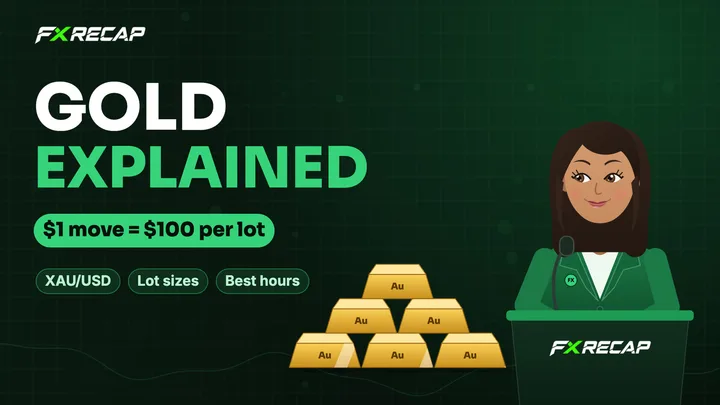 3:43
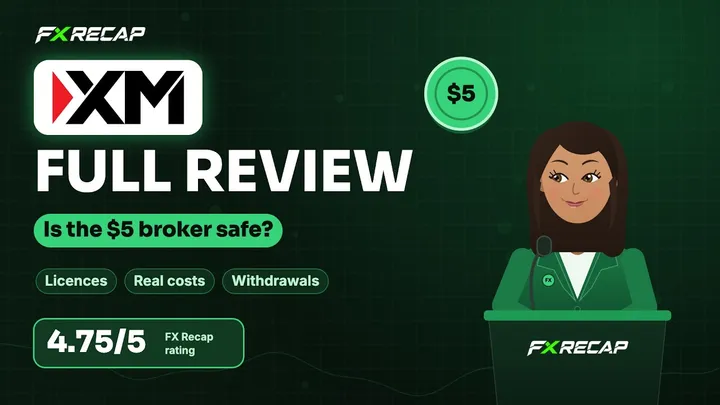 8:42



































Last updated
This tool is for education and planning only and is not financial advice. Forex and CFD trading carries a high risk of losing money rapidly due to leverage. Check your broker's own contract specifications, fees and margin rules before you trade.
Watch this on video
Margin level
From our lesson "Margin Call and Stop Out" (Forex basics, part 11). This part starts at 0:34 of the 2:36 video and plays in a large player.
What is margin?
Margin is the part of your balance a broker sets aside as a deposit while a leveraged trade is open. It is not a cost: it returns to your free margin when the trade closes, minus any loss or plus any profit.
The amount depends on the size of the position and the leverage. Higher leverage means a smaller deposit for the same position, but the profit or loss per pip stays exactly the same.
The margin formula
- Position value
Lots × 100,000 × price, in your account currency. 1 lot of EUR/USD at 1.1000 is $110,000.
- Divide by leverage
At 1:30, $110,000 ÷ 30 ≈ $3,667. At 1:100, $1,100.
- USD-base pairs are simpler
On USD/JPY or USD/CAD, 1 lot is $100,000 whatever the price, so 1:100 needs $1,000.
- Margin % is the same idea
1:30 means 3.33% of the position; 1:100 means 1%.
Margin, free margin and margin level
- Used margin
- The total margin held for your open trades.
- Equity
- Balance plus or minus the open profit or loss.
- Free margin
- Equity minus used margin: what is left for new trades or to absorb losses.
- Margin level
- Equity ÷ used margin × 100. Many brokers call margin around 100% and stop out near 50%; check yours.
Margin for 1 lot of EUR/USD at 1.1000
| Leverage | Margin % | Margin required |
|---|---|---|
| 1:10 | 10% | $11,000 |
| 1:30 | 3.33% | about $3,667 |
| 1:100 | 1% | $1,100 |
| 1:200 | 0.5% | $550 |
| 1:500 | 0.2% | $220 |
Margin mistakes
Little free margin left means a small move against you can trigger a margin call.
Margin is a deposit; your risk is the loss to your stop.
UK and EU retail accounts are limited to 1:30 on major pairs and 1:20 on gold and non-major pairs.
Brokers close positions automatically at their stop-out level; know it before you trade.
Margin Calculator FAQs
What is margin in forex trading?
A deposit the broker holds from your balance while a leveraged trade is open. It is returned when the trade closes, adjusted for profit or loss.
How is forex margin calculated?
Position value in your account currency divided by leverage. 1 lot of EUR/USD at 1.1000 at 1:100 is $110,000 ÷ 100 = $1,100.
What is the difference between used margin and free margin?
Used margin is held for open trades; free margin is equity minus used margin, available for new trades or to absorb losses.
What happens during a margin call?
Your margin level has fallen to the broker's warning level. If losses continue to its stop-out level, the broker starts closing positions.
What is a safe margin level in forex?
There is no single safe number, but keeping it well above the broker's call level, for example several hundred percent, leaves room for normal moves.
What is the difference between margin and leverage in forex?
Leverage is the ratio a broker allows; margin is the deposit that ratio requires. 1:100 leverage means 1% margin.
How do I use the forex margin calculator?
Choose the pair, enter the lots, your leverage and balance. It shows the required margin, free margin and margin level, and the same trade at other leverage levels.
How much margin do I need to trade 1 lot of EUR/USD?
At 1.1000, about $3,667 at 1:30, $1,100 at 1:100 and $220 at 1:500.
What lot sizes are available in forex trading?
Standard (1.00), mini (0.10) and micro (0.01) lots are common; most brokers let you trade in 0.01 steps.
Can I trade forex with a $1,000 account?
Yes, with small positions. 0.01 to 0.05 lots keeps both margin and risk modest on a $1,000 account.
Sources: European Central Bank: euro reference rates, ESMA: CFD product intervention measures.